Turlock, CA Pool Specialists
How Heat Affects Pool Chemicals in California
How Central Valley heat changes chlorine demand, pH behavior, stabilizer strategy, and the rhythm of summer maintenance.
- Built for long Central Valley swim seasons
- Weekly service, repair guidance, and practical scheduling support
- Serving Turlock, Modesto, Ceres, Hughson, Riverbank, and Denair
Why this matters for Turlock pool owners
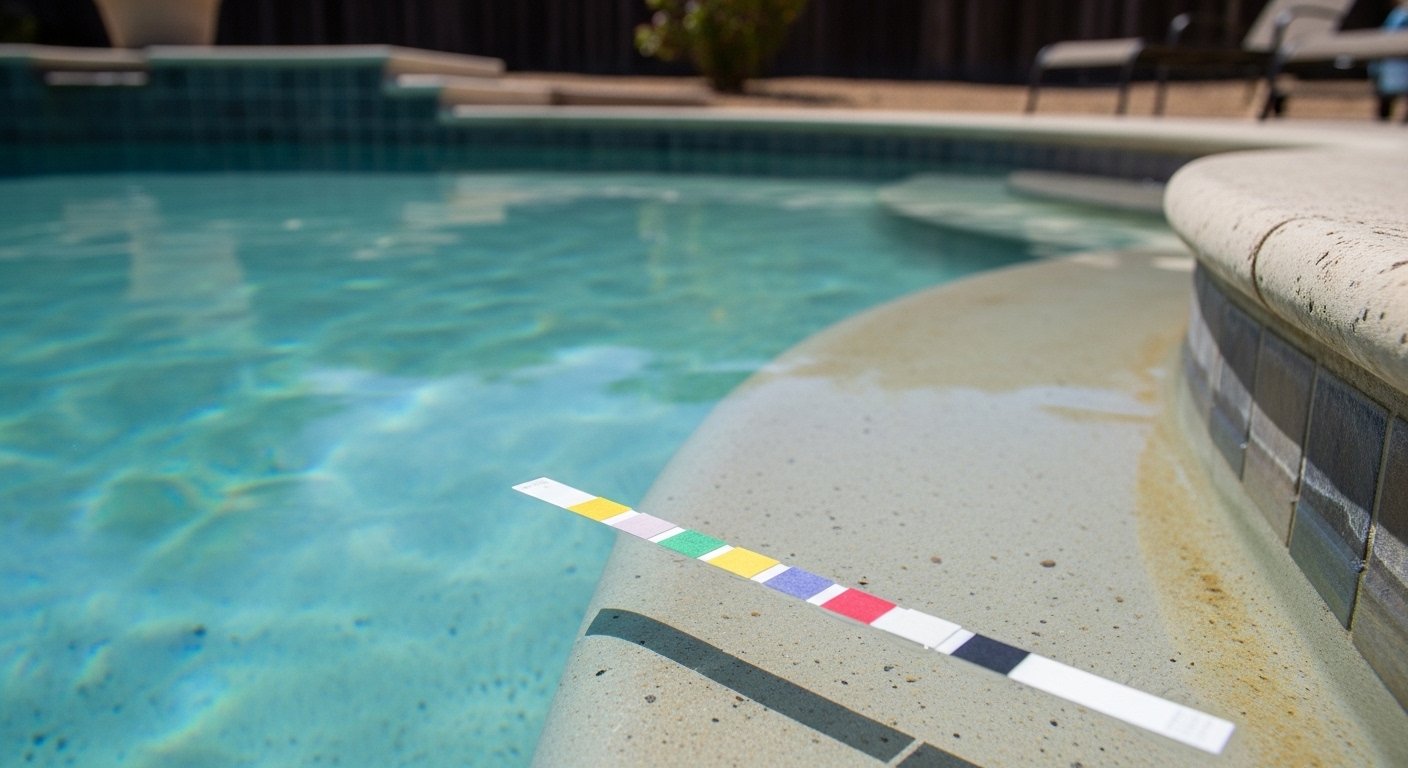
How Central Valley heat changes chlorine demand, pH behavior, stabilizer strategy, and the rhythm of summer maintenance. The Central Valley climate creates very specific pool-care patterns: strong sun, high evaporation, warm water, and an unusually long season of regular use. The goal of this guide is to make those patterns easier to understand so you can make better decisions before a small issue turns into a cleanup or repair call.
Why summer chemistry behaves differently
A pool in March and a pool in August do not behave the same way. In hot California conditions, water temperature climbs, UV exposure intensifies, and bather load usually increases. That combination speeds up chemistry drift. Homeowners often feel like they are adding the same products as always but getting a completely different result because the pool is simply using them faster.
For homeowners in Turlock, CA, the useful question is not just whether this can happen, but how quickly it can happen once the weather settles into a hot pattern. That is why local service planning matters. Pools here often need steadier attention than owners expect after cooler months.
Chlorine demand rises for several reasons at once
Sunlight breaks chlorine down, but strong summer chlorine demand is rarely only about sunlight. Organic contamination, algae pressure, swimmer load, and warm water all add to the draw. The result is that chlorine readings can look acceptable after treatment and still collapse sooner than expected if the underlying load is high.
For homeowners in Turlock, CA, the useful question is not just whether this can happen, but how quickly it can happen once the weather settles into a hot pattern. That is why local service planning matters. Pools here often need steadier attention than owners expect after cooler months.
Heat can exaggerate pH and balance issues
As the pool loses water to evaporation, owners top off with fresh water, and that repeated cycle can affect balance. High heat also means longer pump run times and more constant use, which keeps the system under pressure. If the chemistry is only being checked occasionally, pH, alkalinity, and sanitizer support can drift enough to affect water feel and clarity.
For homeowners in Turlock, CA, the useful question is not just whether this can happen, but how quickly it can happen once the weather settles into a hot pattern. That is why local service planning matters. Pools here often need steadier attention than owners expect after cooler months.
Stabilizer strategy matters
A pool with too little protection against sunlight can burn through chlorine quickly. A pool with poor overall balance can still struggle even when products are being added. The point is not to chase numbers blindly, but to understand that summer chemistry works best when the entire pool system is being considered instead of treating one reading in isolation.
For homeowners in Turlock, CA, the useful question is not just whether this can happen, but how quickly it can happen once the weather settles into a hot pattern. That is why local service planning matters. Pools here often need steadier attention than owners expect after cooler months.
Why weekly attention is easier than catch-up care
Many chemical problems become expensive because they are caught late. Weekly maintenance and weekly service are often simpler and more affordable than repeatedly resetting a pool that keeps slipping backward in high heat. For many Turlock pools, consistency is the most important chemical strategy.
For homeowners in Turlock, CA, the useful question is not just whether this can happen, but how quickly it can happen once the weather settles into a hot pattern. That is why local service planning matters. Pools here often need steadier attention than owners expect after cooler months.
Frequently asked questions
Why does chlorine disappear faster in hot weather?
Sunlight, heat, heavy use, and organic contamination all increase chlorine demand.
Can high heat change pH too?
Heat and water loss can contribute to chemistry drift, especially when the pool is being topped off frequently.
Should I test more often in summer?
Yes. Hot-weather pools generally need closer attention than spring or fall pools.
Need pool help in Turlock or a nearby city?
Call or text Turlock Pool Care Collective for scheduling, route availability, and the most practical next step for your pool.